Partnerships
Uganda Seeks to Expand ICT Cooperation with Japan through UJ Connect
Uganda seeks to deepen its ICT cooperation with Japan by building on the Uganda-Japan ICT Industry Promotion Project, UJ Connect, which has supported digital skills, entrepreneurship, and business links between Ugandan and Japanese companies.
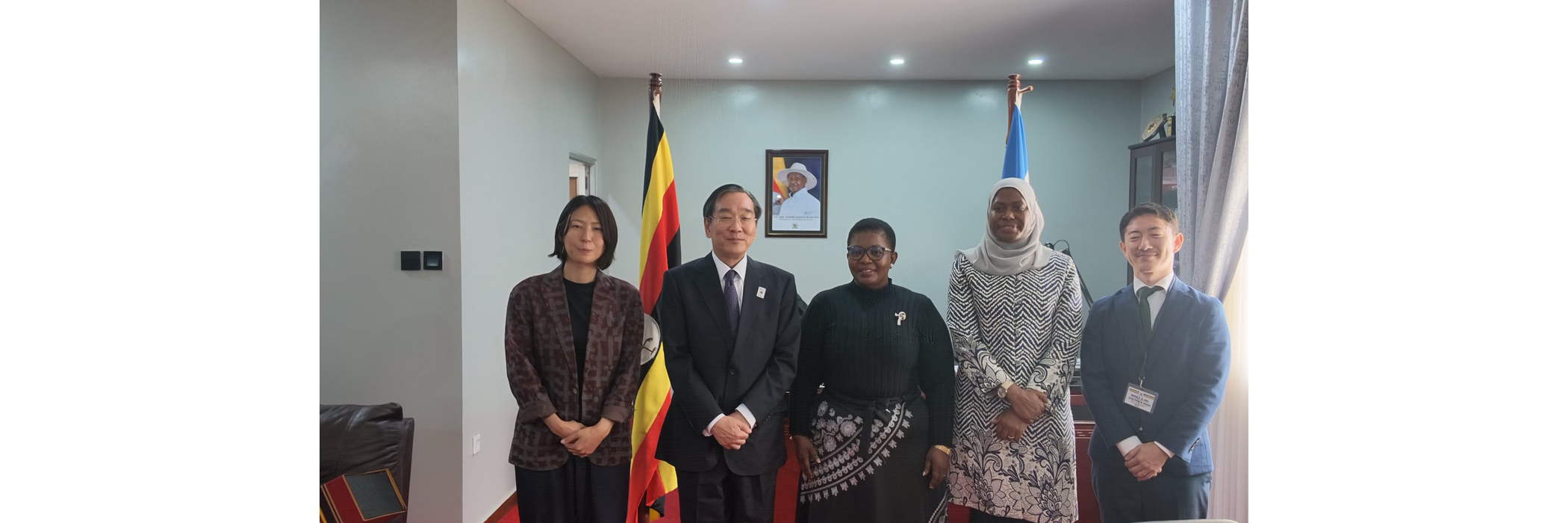
The proposal was discussed during a courtesy meeting between the Rt. Hon. Minister of ICT and National Guidance, Justine Kasule Lumumba, and H.E. Mr. Takuya Sasayama, Ambassador of Japan to the Republic of Uganda.
The Permanent Secretary, Dr. Aminah Zawedde, attended the meeting alongside Mr. Hiroyuki Hayashi, First Secretary at the Embassy of Japan in Uganda; Mr. Shimpei Watanabe, JICA Expert on the ICT Industry Promotion Project; and Ms. Aya Tsuboi, Co-Founder and CEO of Sunda Technology Global.
With the current UJ Connect project expected to conclude in early 2027, the Ministry proposed a second phase to reach more young Ugandans, strengthen links with international technology companies, and increase the use of Artificial Intelligence in skills and solution development. “We have seen that the model works, and we need to scale up from UJ Connect 1 to UJ Connect 2,” Dr. Zawedde said.
Implemented with support from the Japan International Cooperation Agency (JICA), UJ Connect focuses on policy support, human resource development, business matching and entrepreneurship.
Mr. Watanabe said the project has supported the development of ICT Intellectual Property Guidelines and skills standards for ICT professionals, strengthened training at the Uganda Institute of Information and Communications Technology, and created internship and mentorship opportunities.
It has also connected Ugandan ICT companies and professionals to international markets. Some Ugandan professionals have secured opportunities to work with Japanese companies while remaining in Uganda, while local technology companies have gained exposure to other Asian markets, including Vietnam and Malaysia.
The project has also supported the development of a database of Ugandan ICT professionals and companies, making it easier for potential international partners to identify available skills and business capabilities.
Dr. Zawedde said Uganda's young population presents an opportunity to grow the country's Business Process Outsourcing and ICT-enabled services industry, particularly by connecting skilled young people to international companies.
The Ministry wants the proposed second phase to build on these gains by expanding mentorship, international exposure and business matching, while exploring how AI can strengthen the capabilities of young innovators and ICT companies.
Ambassador Sasayama said Japan's approach is to support initiatives that can grow beyond the initial intervention. “What Japan tries to do is sow the seed, and the seed will come up in the future,” he said.
The meeting also highlighted the potential of combining Ugandan talent and local knowledge with Japanese technology and technical experience. Ms. Tsuboi shared the experience of Sunda Technology Global, which was developed with Ugandan engineers and uses digital technology and mobile money to support the management of community water systems.
Rt. Hon. Lumumba welcomed the progress made through Uganda-Japan cooperation and called for stronger partnerships that translate skills and technology into jobs, businesses and investment.
She encouraged Japanese companies to work more closely with Ugandan businesses, innovators, and universities, particularly in research, technology transfer, and developing solutions that can serve both Uganda and the wider region. “The market in Uganda may be small, but we have a bigger market in East Africa,” she said.
As UJ Connect nears the end of its current phase, the Ministry is focused on sustaining what has worked and expanding opportunities for Uganda's young ICT professionals and companies to participate in regional and global digital markets.
The proposal was discussed during a courtesy meeting between the Rt. Hon. Minister of ICT and National Guidance, Justine Kasule Lumumba, and H.E. Mr. Takuya Sasayama, Ambassador of Japan to the Republic of Uganda.
The Permanent Secretary, Dr. Aminah Zawedde, attended the meeting alongside Mr. Hiroyuki Hayashi, First Secretary at the Embassy of Japan in Uganda; Mr. Shimpei Watanabe, JICA Expert on the ICT Industry Promotion Project; and Ms. Aya Tsuboi, Co-Founder and CEO of Sunda Technology Global.
With the current UJ Connect project expected to conclude in early 2027, the Ministry proposed a second phase to reach more young Ugandans, strengthen links with international technology companies, and increase the use of Artificial Intelligence in skills and solution development. “We have seen that the model works, and we need to scale up from UJ Connect 1 to UJ Connect 2,” Dr. Zawedde said.
Implemented with support from the Japan International Cooperation Agency (JICA), UJ Connect focuses on policy support, human resource development, business matching and entrepreneurship.
Mr. Watanabe said the project has supported the development of ICT Intellectual Property Guidelines and skills standards for ICT professionals, strengthened training at the Uganda Institute of Information and Communications Technology, and created internship and mentorship opportunities.
It has also connected Ugandan ICT companies and professionals to international markets. Some Ugandan professionals have secured opportunities to work with Japanese companies while remaining in Uganda, while local technology companies have gained exposure to other Asian markets, including Vietnam and Malaysia.
The project has also supported the development of a database of Ugandan ICT professionals and companies, making it easier for potential international partners to identify available skills and business capabilities.
Dr. Zawedde said Uganda's young population presents an opportunity to grow the country's Business Process Outsourcing and ICT-enabled services industry, particularly by connecting skilled young people to international companies.
The Ministry wants the proposed second phase to build on these gains by expanding mentorship, international exposure and business matching, while exploring how AI can strengthen the capabilities of young innovators and ICT companies.
Ambassador Sasayama said Japan's approach is to support initiatives that can grow beyond the initial intervention. “What Japan tries to do is sow the seed, and the seed will come up in the future,” he said.
The meeting also highlighted the potential of combining Ugandan talent and local knowledge with Japanese technology and technical experience. Ms. Tsuboi shared the experience of Sunda Technology Global, which was developed with Ugandan engineers and uses digital technology and mobile money to support the management of community water systems.
Rt. Hon. Lumumba welcomed the progress made through Uganda-Japan cooperation and called for stronger partnerships that translate skills and technology into jobs, businesses and investment.
She encouraged Japanese companies to work more closely with Ugandan businesses, innovators, and universities, particularly in research, technology transfer, and developing solutions that can serve both Uganda and the wider region. “The market in Uganda may be small, but we have a bigger market in East Africa,” she said.
As UJ Connect nears the end of its current phase, the Ministry is focused on sustaining what has worked and expanding opportunities for Uganda's young ICT professionals and companies to participate in regional and global digital markets.
The author is a Communications Officer at the Ministry of ICT & National Guidance.