Partnerships
Uganda and Korea Explore Cooperation on Data Infrastructure and Digital Skills

Uganda and the Republic of Korea have explored opportunities to strengthen cooperation in digital infrastructure, artificial intelligence and skills development, with a proposed national data centre among the priorities discussed.
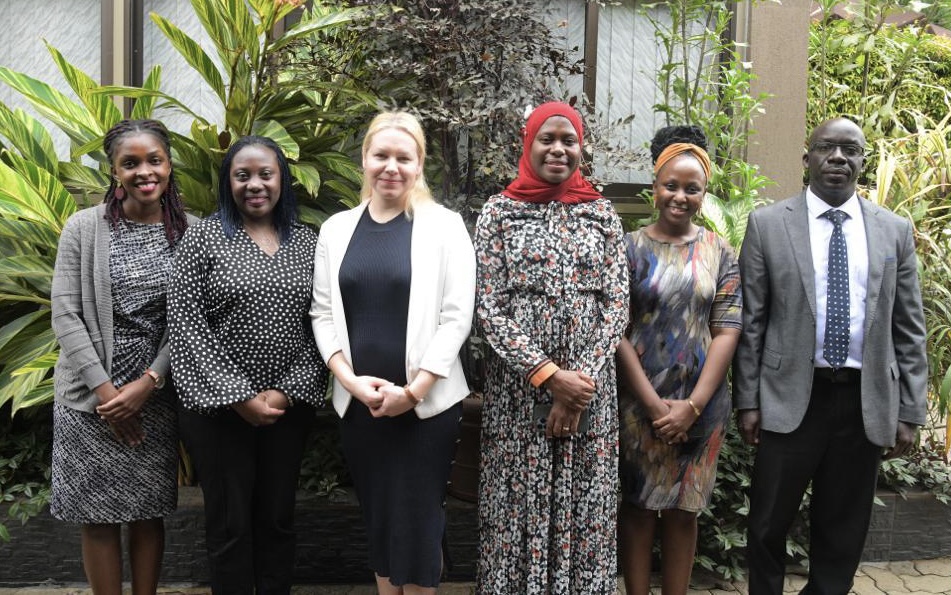
The discussions took place during a courtesy meeting between the Minister of ICT and National Guidance, Rt. Hon. Justine Kasule Lumumba, and the Korean Ambassador to Uganda, H.E. Lee Sang-ho, at the Ministry on 1 October 2026. Also present were the Minister of State for National Guidance, Hon. Alioni Yorke Odria, and the Permanent Secretary, Dr. Aminah Zawedde.
The meeting focused on how Korean financing, technology and expertise could support Uganda’s digital transformation. Participants identified the proposed national data centre as a priority to support digital government and expand public services. Participants explored possible financing through Korea’s Economic Development Cooperation Fund, alongside technical assistance and staff training.
The engagement builds on an ICT cooperation framework established in 2016 and the broader agreement signed at the first Korea–Africa Summit in June 2024, providing for up to US$500 million in concessional financing for Uganda.
Welcoming the Ambassador and congratulating him on his appointment, Rt. Hon. Lumumba called for partnerships that link infrastructure investment with opportunities for young Ugandans. “Our collaboration should deepen industry-relevant skills in software engineering, cloud computing, cybersecurity, data science, AI, and digital product management, enabling youth to create their own employment and contribute meaningfully to the economy,” she said.
The Minister proposed stronger links between Korean technology companies, Ugandan ICT firms, universities and innovation hubs. Potential areas of cooperation include software development centres, artificial intelligence laboratories, business process outsourcing centres and joint innovation programmes.
She also encouraged Korean companies to use Uganda as a base for developing solutions for regional markets. “A Korean company should come to Uganda and be able to develop and test solutions here, then scale them across the East African Community and wider African markets,” she said.
The Korean delegation said it was ready to share its country’s experience in technology and digital development. Discussions highlighted the need to combine infrastructure investment with training, technical support and maintenance so that projects remain effective over time.
The Minister acknowledged Korea’s earlier contribution to Uganda’s first e-government master plan and the training of Ugandan officials through Korean-supported programmes.
The discussions took place during a courtesy meeting between the Minister of ICT and National Guidance, Rt. Hon. Justine Kasule Lumumba, and the Korean Ambassador to Uganda, H.E. Lee Sang-ho, at the Ministry on 1 October 2026. Also present were the Minister of State for National Guidance, Hon. Alioni Yorke Odria, and the Permanent Secretary, Dr. Aminah Zawedde.
The meeting focused on how Korean financing, technology and expertise could support Uganda’s digital transformation. Participants identified the proposed national data centre as a priority to support digital government and expand public services. Participants explored possible financing through Korea’s Economic Development Cooperation Fund, alongside technical assistance and staff training.
The engagement builds on an ICT cooperation framework established in 2016 and the broader agreement signed at the first Korea–Africa Summit in June 2024, providing for up to US$500 million in concessional financing for Uganda.
Welcoming the Ambassador and congratulating him on his appointment, Rt. Hon. Lumumba called for partnerships that link infrastructure investment with opportunities for young Ugandans. “Our collaboration should deepen industry-relevant skills in software engineering, cloud computing, cybersecurity, data science, AI, and digital product management, enabling youth to create their own employment and contribute meaningfully to the economy,” she said.
The Minister proposed stronger links between Korean technology companies, Ugandan ICT firms, universities and innovation hubs. Potential areas of cooperation include software development centres, artificial intelligence laboratories, business process outsourcing centres and joint innovation programmes.
She also encouraged Korean companies to use Uganda as a base for developing solutions for regional markets. “A Korean company should come to Uganda and be able to develop and test solutions here, then scale them across the East African Community and wider African markets,” she said.
The Korean delegation said it was ready to share its country’s experience in technology and digital development. Discussions highlighted the need to combine infrastructure investment with training, technical support and maintenance so that projects remain effective over time.
The Minister acknowledged Korea’s earlier contribution to Uganda’s first e-government master plan and the training of Ugandan officials through Korean-supported programmes.
The author is a Communications Officer at the Ministry of ICT & National Guidance.