Media
Uganda Marks World Press Freedom Day 2026
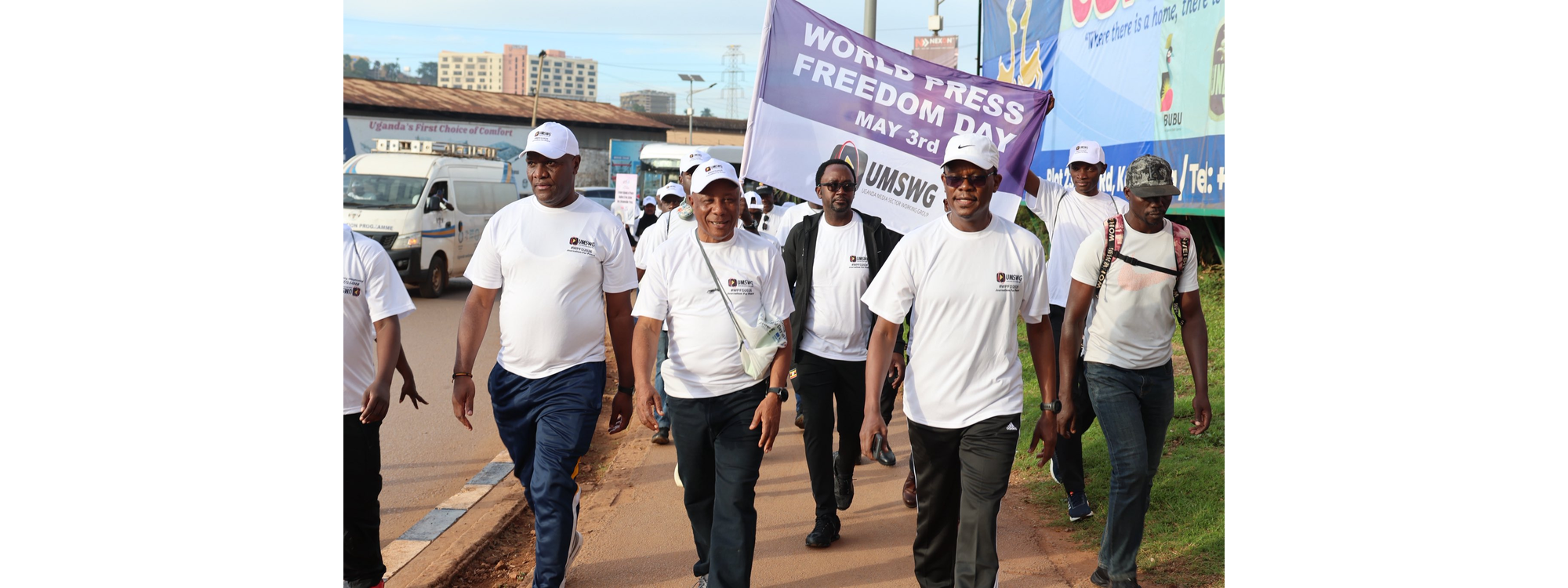
Uganda marked World Press Freedom Day 2026 at the Uganda Broadcasting Corporation (UBC) Grounds, bringing together journalists, regulators, and media stakeholders to highlight the press's role in society. The day began with a commemorative walk, flagged off by Hon. Kabbyanga Godfrey Baluku, the state minister for National Guidance at the Ministry of ICT and National Guidance, whose remarks set the tone for a broader conversation on both progress and responsibility within Uganda’s media space.
The commemoration followed the global theme “Shaping a Future at Peace” and Uganda’s sub-theme “Promoting Press Freedom for Human Rights, Development, and Security in Uganda.” The message running through the day was clear: press freedom is not an isolated issue. It sits at the centre of stability, accountability, and national development.
Uganda’s media landscape reflects that shift. With over 300 radio stations, more than 70 television channels, and a rapidly growing digital presence, information now moves faster and reaches further than ever before. Social media has become a real-time arena where public debate plays out openly, giving more people a voice in national conversations. With about 27.7 million internet users, representing roughly 61% penetration, access to information is no longer limited. These points suggest a system shaped by many voices, not controlled from a single centre.
Speaking at the event, Hon. Kabbyanga was direct. Media freedom, he said, is not under threat. “We are not about to suppress media freedoms.” But he paired that assurance with a clear expectation. Journalists, he noted, must avoid hate speech, verify information before publishing, and report in a way that reflects all sides of a story. The underlying point was straightforward. Freedom carries responsibility, and credibility depends on how that responsibility is handled.
Beyond reporting, the media’s impact is already visible across sectors. Radio campaigns have supported public health efforts, agricultural programmes have improved farming practices, and community stations have extended critical information to underserved areas. In practical terms, journalism in Uganda is not just about informing people. It is influencing outcomes and shaping everyday life.
The event also recognised and awarded the Lifetime Achievement Award to individuals who have carried that responsibility over time. Sheila Kawamara Mishambi received the award for her reporting during the 1990–1994 conflict and genocide in Rwanda, while John Muto Ono P'Lajur was honoured for documenting the Northern Uganda conflict from 1986 to 2006. Their work reflects the depth and risk that often come with telling difficult stories.
A note of caution also came through. Paulo Ekochu, Chairperson of the Media Council of Uganda, captured it simply, freedom and responsibility must go hand in hand. Remove one, and the other loses its meaning.
Looking ahead, attention turned to the growing influence of Artificial Intelligence in newsrooms. While it speeds up work and improves efficiency, it also raises concerns about misinformation, deepfakes, and declining public trust if not carefully managed. The position emerging from the discussions was measured. Use the tools, but stay in control of them. Technology should support journalism, not weaken it.
As the day closed, the message held. Uganda’s media sector is active and influential, but more importantly, it is consequential. It shapes what people know, how they think, and how they engage with the world around them. Keeping it free while strengthening its standards is not a contradiction. It is what makes the system work.
The commemoration followed the global theme “Shaping a Future at Peace” and Uganda’s sub-theme “Promoting Press Freedom for Human Rights, Development, and Security in Uganda.” The message running through the day was clear: press freedom is not an isolated issue. It sits at the centre of stability, accountability, and national development.
Uganda’s media landscape reflects that shift. With over 300 radio stations, more than 70 television channels, and a rapidly growing digital presence, information now moves faster and reaches further than ever before. Social media has become a real-time arena where public debate plays out openly, giving more people a voice in national conversations. With about 27.7 million internet users, representing roughly 61% penetration, access to information is no longer limited. These points suggest a system shaped by many voices, not controlled from a single centre.
Speaking at the event, Hon. Kabbyanga was direct. Media freedom, he said, is not under threat. “We are not about to suppress media freedoms.” But he paired that assurance with a clear expectation. Journalists, he noted, must avoid hate speech, verify information before publishing, and report in a way that reflects all sides of a story. The underlying point was straightforward. Freedom carries responsibility, and credibility depends on how that responsibility is handled.
Beyond reporting, the media’s impact is already visible across sectors. Radio campaigns have supported public health efforts, agricultural programmes have improved farming practices, and community stations have extended critical information to underserved areas. In practical terms, journalism in Uganda is not just about informing people. It is influencing outcomes and shaping everyday life.
The event also recognised and awarded the Lifetime Achievement Award to individuals who have carried that responsibility over time. Sheila Kawamara Mishambi received the award for her reporting during the 1990–1994 conflict and genocide in Rwanda, while John Muto Ono P'Lajur was honoured for documenting the Northern Uganda conflict from 1986 to 2006. Their work reflects the depth and risk that often come with telling difficult stories.
A note of caution also came through. Paulo Ekochu, Chairperson of the Media Council of Uganda, captured it simply, freedom and responsibility must go hand in hand. Remove one, and the other loses its meaning.
Looking ahead, attention turned to the growing influence of Artificial Intelligence in newsrooms. While it speeds up work and improves efficiency, it also raises concerns about misinformation, deepfakes, and declining public trust if not carefully managed. The position emerging from the discussions was measured. Use the tools, but stay in control of them. Technology should support journalism, not weaken it.
As the day closed, the message held. Uganda’s media sector is active and influential, but more importantly, it is consequential. It shapes what people know, how they think, and how they engage with the world around them. Keeping it free while strengthening its standards is not a contradiction. It is what makes the system work.
The author is a Communications Officer at the Ministry of ICT & National Guidance.