Communication
Uganda and China Deepen Digital Cooperation
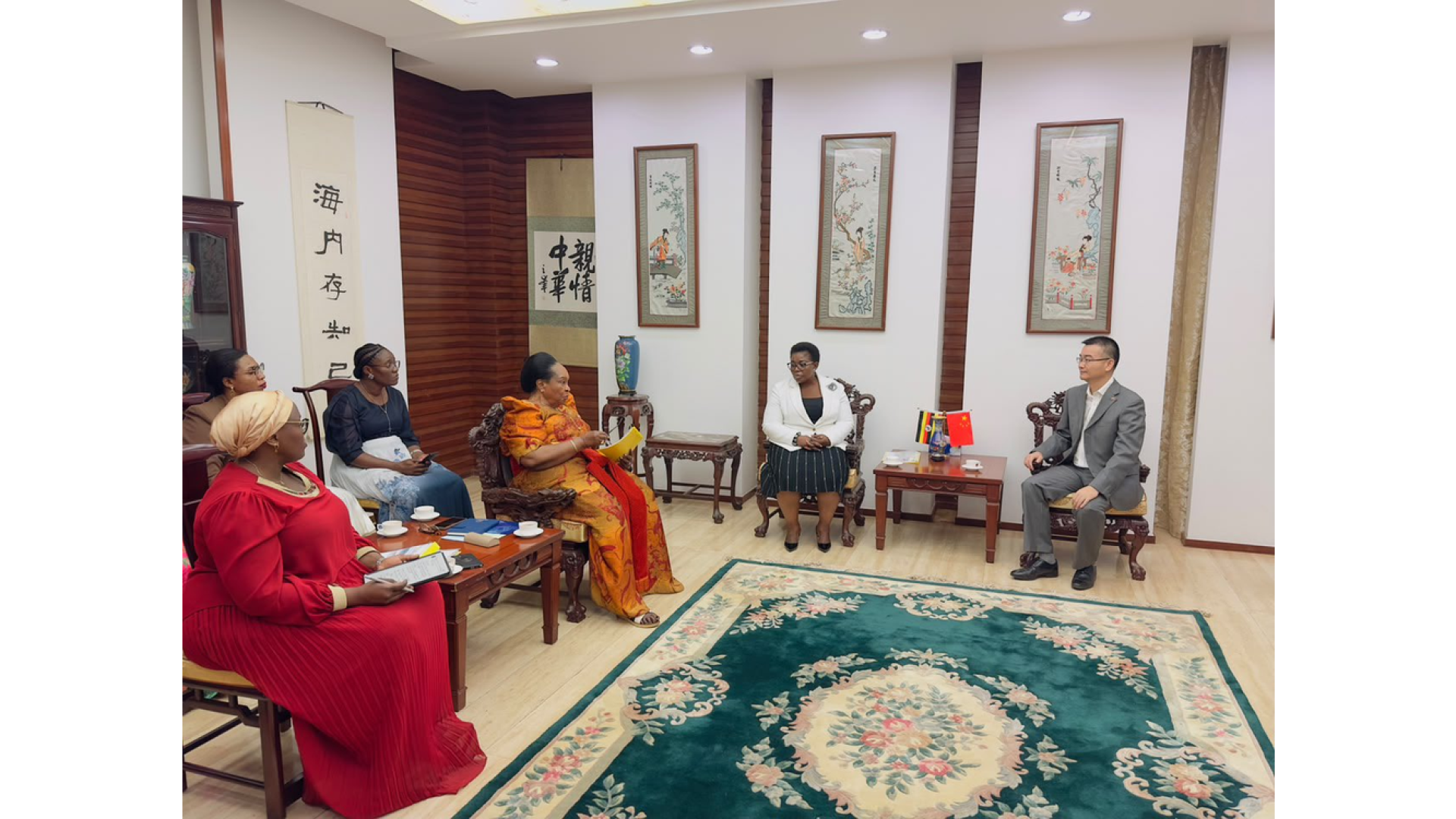
Uganda and China are exploring expanded cooperation in artificial intelligence, digital infrastructure, skills development and technology-driven solutions.
The discussions were held at the Embassy of the People’s Republic of China in Kampala on 9th July 2026. The Minister of ICT and National Guidance, Rt. Hon. Justine Kasule Lumumba, led the Ministry delegation, accompanied by the Minister of State for Information, Communication and Technology, Hon. Joyce Nabbosa Ssebugwawo, and the Acting Permanent Secretary, Ms. Sophia Nantongo.
Welcoming the delegation, the Acting Ambassador of the People’s Republic of China to Uganda, Mr. Fan XueCheng, highlighted the longstanding relations between the two countries and congratulated Rt. Hon. Lumumba on her appointment. He also recognised her contribution to Uganda-China relations in her previous leadership roles.
Mr. Fan noted that the growth of artificial intelligence presents opportunities to improve everyday life, public service delivery and production. He expressed China’s readiness to share its technological experience with Uganda through training, knowledge exchange and exposure to emerging technologies.
Huawei highlighted its contribution to Uganda’s ICT sector over the past 25 years, including its involvement in telecommunications, cloud services and national digital infrastructure.
One of the clearest examples is the National Data Transmission Backbone Infrastructure, which provides the foundation for Uganda’s digital services. Currently, 1,577 Government sites are connected to the National Backbone Infrastructure, including 53 district local government headquarters and 10 border points. Government has also established 300 public Wi-Fi hotspots.
Under Phase V, an additional 5,845 kilometres of fibre optic cable is being rolled out, bringing the national fibre network to 10,232 kilometres. The expansion is expected to reach 63 additional districts, 2,800 Government sites and 1,754 Wi-Fi locations.
Huawei also highlighted its contribution to the National Data Centre and the national CCTV network, as well as its investment in ICT skills through initiatives such as the Huawei ICT Competition. Uganda’s performance at the global finals demonstrated the potential of its young innovators to develop solutions and compete internationally.
Rt. Hon. Lumumba thanked the Government of the People’s Republic of China for its support for Uganda in ICT, infrastructure, energy, vocational training, and other sectors. She called for greater investment in practical technologies that address everyday challenges and improve productivity. She noted that artificial intelligence can support solutions in agriculture, livestock, fisheries and public service delivery while creating opportunities for young people.
With 77% of Uganda’s population under 25, the Minister encouraged Chinese technology companies and partners to introduce innovations and create opportunities that equip young people to participate in the digital economy.
She also called for technologies that support local languages, noting that language should not prevent people from acquiring technical skills or accessing digital services. Adapting AI and telecommunications solutions to Uganda’s linguistic diversity would enable more communities to benefit from technology.
Rt. Hon. Lumumba highlighted the need for reliable energy to support the expansion of AI, data centres and other digital infrastructure. She noted that growing demand for connectivity and data processing must be matched by adequate power.
On information management, the Minister observed that technology has made information easier to access and share. With approximately 47 million active mobile subscriptions in Uganda, digital communication offers significant opportunities to improve access to information and services.
She called for responsible use of technology and solutions that expand access to accurate information while addressing misinformation and harmful content.
The engagement concluded with a commitment to advance collaboration in artificial intelligence, digital infrastructure, innovation, skills development and knowledge exchange.
The discussions were held at the Embassy of the People’s Republic of China in Kampala on 9th July 2026. The Minister of ICT and National Guidance, Rt. Hon. Justine Kasule Lumumba, led the Ministry delegation, accompanied by the Minister of State for Information, Communication and Technology, Hon. Joyce Nabbosa Ssebugwawo, and the Acting Permanent Secretary, Ms. Sophia Nantongo.
Welcoming the delegation, the Acting Ambassador of the People’s Republic of China to Uganda, Mr. Fan XueCheng, highlighted the longstanding relations between the two countries and congratulated Rt. Hon. Lumumba on her appointment. He also recognised her contribution to Uganda-China relations in her previous leadership roles.
Mr. Fan noted that the growth of artificial intelligence presents opportunities to improve everyday life, public service delivery and production. He expressed China’s readiness to share its technological experience with Uganda through training, knowledge exchange and exposure to emerging technologies.
Huawei highlighted its contribution to Uganda’s ICT sector over the past 25 years, including its involvement in telecommunications, cloud services and national digital infrastructure.
One of the clearest examples is the National Data Transmission Backbone Infrastructure, which provides the foundation for Uganda’s digital services. Currently, 1,577 Government sites are connected to the National Backbone Infrastructure, including 53 district local government headquarters and 10 border points. Government has also established 300 public Wi-Fi hotspots.
Under Phase V, an additional 5,845 kilometres of fibre optic cable is being rolled out, bringing the national fibre network to 10,232 kilometres. The expansion is expected to reach 63 additional districts, 2,800 Government sites and 1,754 Wi-Fi locations.
Huawei also highlighted its contribution to the National Data Centre and the national CCTV network, as well as its investment in ICT skills through initiatives such as the Huawei ICT Competition. Uganda’s performance at the global finals demonstrated the potential of its young innovators to develop solutions and compete internationally.
Rt. Hon. Lumumba thanked the Government of the People’s Republic of China for its support for Uganda in ICT, infrastructure, energy, vocational training, and other sectors. She called for greater investment in practical technologies that address everyday challenges and improve productivity. She noted that artificial intelligence can support solutions in agriculture, livestock, fisheries and public service delivery while creating opportunities for young people.
With 77% of Uganda’s population under 25, the Minister encouraged Chinese technology companies and partners to introduce innovations and create opportunities that equip young people to participate in the digital economy.
She also called for technologies that support local languages, noting that language should not prevent people from acquiring technical skills or accessing digital services. Adapting AI and telecommunications solutions to Uganda’s linguistic diversity would enable more communities to benefit from technology.
Rt. Hon. Lumumba highlighted the need for reliable energy to support the expansion of AI, data centres and other digital infrastructure. She noted that growing demand for connectivity and data processing must be matched by adequate power.
On information management, the Minister observed that technology has made information easier to access and share. With approximately 47 million active mobile subscriptions in Uganda, digital communication offers significant opportunities to improve access to information and services.
She called for responsible use of technology and solutions that expand access to accurate information while addressing misinformation and harmful content.
The engagement concluded with a commitment to advance collaboration in artificial intelligence, digital infrastructure, innovation, skills development and knowledge exchange.
The author is a Communications Officer at the Ministry of ICT & National Guidance.