ICT
Soroti University Hosts Workshop on Protecting ICT Innovations
.png)
Innovators at Soroti University have been urged to protect their intellectual property and turn research and student projects into products and services that attract investment and create jobs.
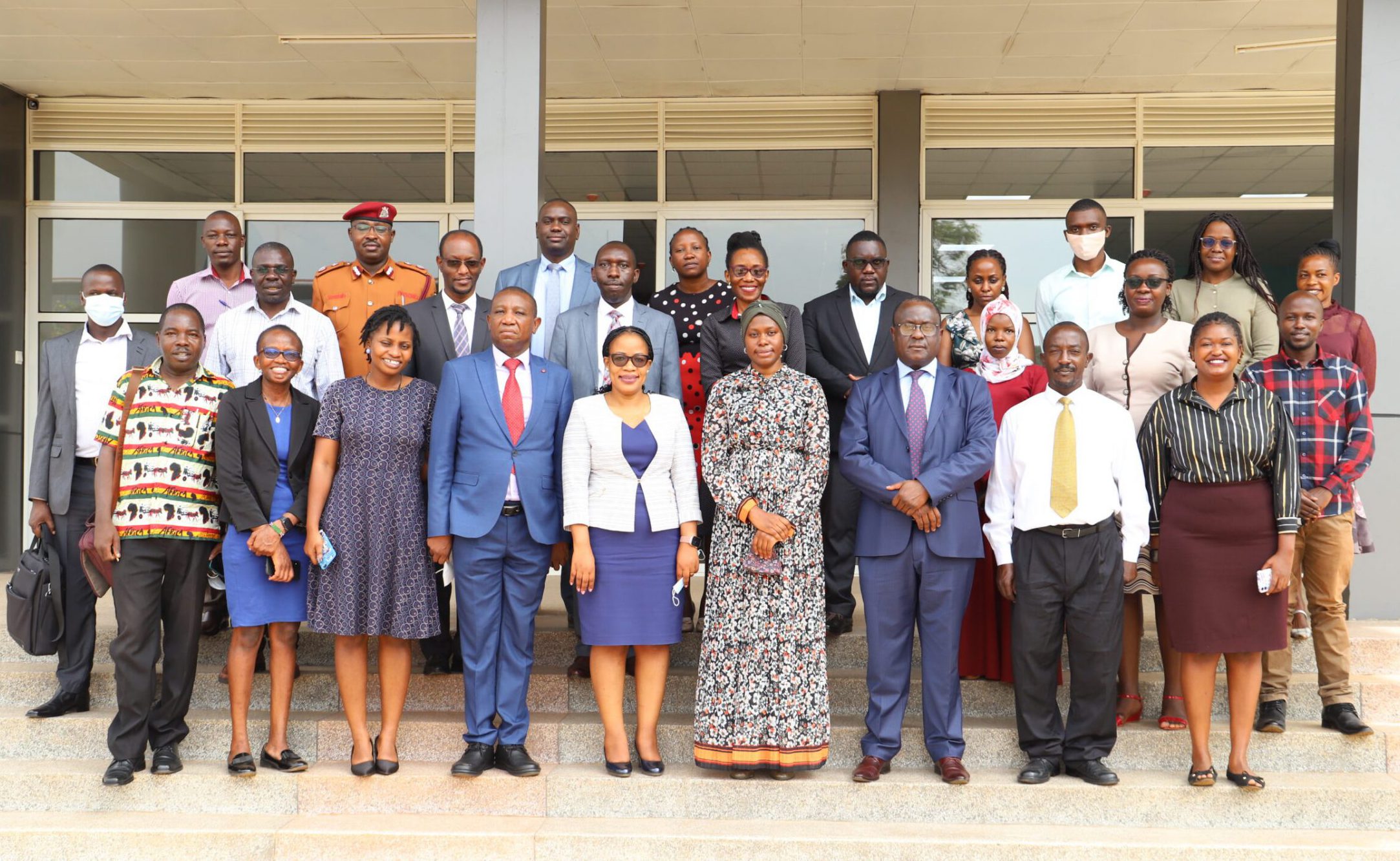
The call came during a one-day ICT Intellectual Property (IP) Guidelines Dissemination Workshop held at the university’s Regional ICT Innovation Hub. The Ministry of ICT and National Guidance organised the workshop with Soroti University, supported by the Japan International Cooperation Agency (JICA).
The workshop brought together university leaders, academic staff, researchers, students, innovators and innovation partners to discuss how to identify, protect, manage and commercialise ICT innovations.
Speaking on behalf of the Ministry, Mr. Amos Mpungu, Acting Commissioner for E-Services, said the partnership with universities through regional innovation hubs had generated promising ideas. The challenge was getting those ideas to market. “Innovation is not the problem, but scaling it to the market is where the challenge lies,” he said.
Mr. Mpungu challenged Soroti University to take a leading role in developing local technology solutions. He noted that major financial and telecommunications firms operating in Uganda still source software from abroad, presenting an opportunity for universities to develop solutions that meet industry needs.
The Ministry developed the Uganda ICT IP Guidelines with JICA’s support under the UJ-Connect Project, following extensive stakeholder consultations. The Guidelines address practical questions, including who owns innovations developed by students and staff, how benefits should be shared and how disputes can be resolved.
For universities and innovators, this guidance can help clarify ownership before a product attracts commercial interest, providing a stronger basis for partnerships and investment.
Soroti University Vice Chancellor, Prof. John Robert Ikoja Odongo, said Uganda needed an innovation ecosystem that could sustain itself by turning ideas into technologies, businesses, jobs and public value.
He appealed to the Ministry and JICA to support a fully equipped ICT incubation hub at the university, with mentorship, prototyping facilities, enterprise development support and links to industry.
Soroti University hosts one of the Regional ICT Innovation Hubs established in partnership with the Ministry. The hub supports efforts to translate research and student innovations into practical solutions for the Teso sub-region and the wider country.
Mr. Shimpei Watanabe, JICA’s ICT Industry Promotion Expert, said the agency was supporting regional innovation hubs to develop solutions to local challenges in health, agriculture and infrastructure. He added that the UJ-Connect Project also seeks to strengthen links between Uganda's and Japan's technology sectors.
Dr. Excellence Favor, Senior Lecturer and Deputy Dean of the School of Engineering and Technology, encouraged students to develop and test their ideas. She proposed that every student in the school graduate with at least five working innovations intended for public use.
During the sessions, participants discussed protecting inventions, software, designs, brands, and creative works. They also shared challenges in registering and enforcing their intellectual property rights. Facilitators advised them to consider protection early in product development and use available IP information and support services.
The workshop forms part of the Ministry’s wider dissemination of the ICT IP Guidelines to universities and innovation hubs across Uganda, helping innovators protect their work and prepare it for domestic and international markets.
The author is a SICTO at the Ministry of ICT & National Guidance.