ICT
Nationwide E-waste campaign launched as Uganda marks 4th National Cleaning Day
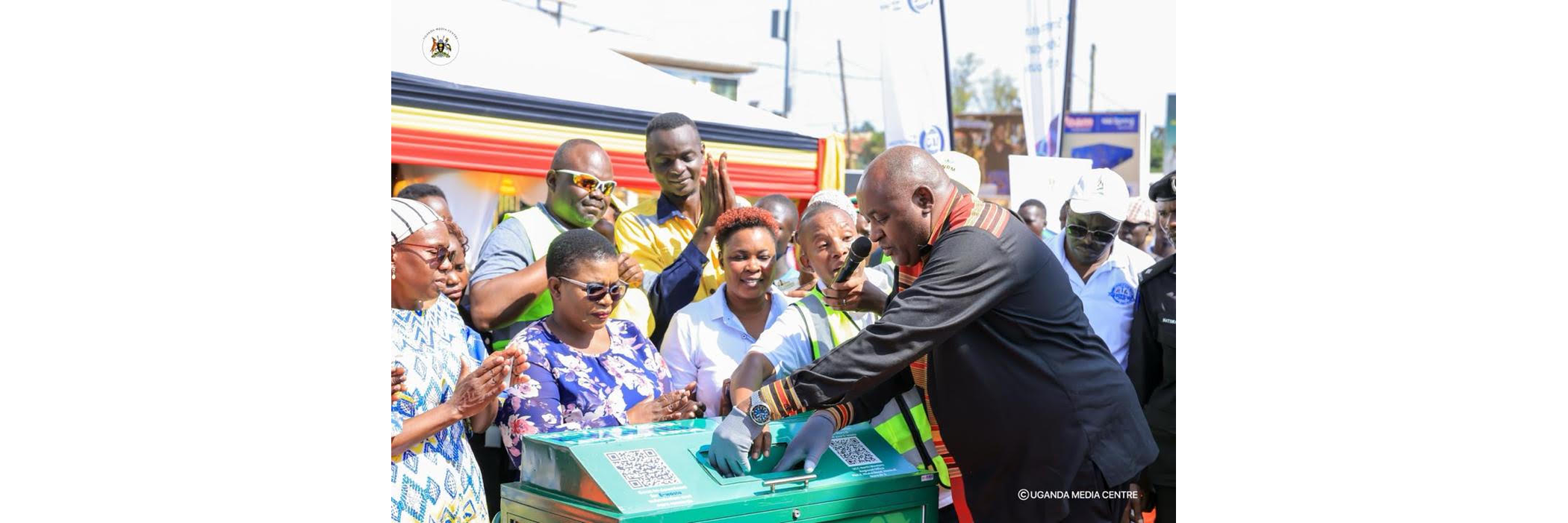
The launch of a nationwide campaign to champion the appropriate collection, segregation, refurbishment and disposal of electronic waste dominated Uganda’s 4th occasion of the National Cleaning Days today, the 31st of October, 2026, at the main clean-up site in Lira, one of the host Cities for the forthcoming Pamoja African Cup of Nations. Held under the theme, “A clean Uganda is everyone’s Responsibility,” this initiative takes place nationally every last Saturday of the month from 7:00 am-10:00 am.
Speaking at the cleaning and the launch of the e-waste campaign, Hon. Chris Baryomunsi, the Minister of Health, who represented Rt. Hon. Robinah Nabbanja, the Prime Minister, as the Chief Guest, educated the general public gathered at Lavington Park in Lira City that waste comes in various forms and that e-waste, in particular, should be collected and managed separately.
“Many of us use electronics in our day-to-day life, and when these electronics come to the end of their lifespan, they become e-waste,” he said. “It is not safe to mix this kind of waste with the others because it has the capability of emitting fumes that can be harmful to our health. That is why it is better to discard them separately,” he added.
These remarks by Dr. Baryomunsi had earlier been emphasized by Rt. Hon. Justine Kasule Lumumba, the Minister for ICT and National Guidance. She impressed on the throngs of people present that e-waste includes any equipment that plugs into electricity or uses batteries, including household appliances and ICT equipment used in hospitals, schools and industries, among others.
“As Uganda becomes more digital, we use more of this equipment to support planning, business, healthcare and public service. Even then, we should know that there comes a time when they have been used exhaustively and therefore have to be disposed of appropriately,” she said.
Rt. Hon. Lumumba also went ahead to recognize the contribution of key strategic partners in combating the challenge of e-waste like the Uganda Communications Commission (UCC) and Towa Uchafu Na Nusu (TUNN). Through a six-month ICT e-waste collection pilot project kickstarted in August 2025, UCC has permanently set up 20 specialised e-waste collection bins nationwide, collecting over 3,000 kilogrammes of electronic gadgets. Today, Lira City received 2 such bins that will be stationed at Lira University as a central collection point for Lira City’s e-waste.
Hon. Jane Ruth Aceng Ocero, the Woman Member of Parliament for Lira City and also the Government Chief Whip, applauded the e-waste initiative and urged the people of Lira City to embrace it wholeheartedly. She also challenged her constituents to adopt a culture of cleanliness not just during cleaning days but as a daily habit.
“When we entered to clean the market, we found that the vendors had cleaned it already, so we just collected rubbish. Thank you for cleaning Lira Main Market because it is where we buy our food stuff. It is therefore important that the market should be clean, the people who sell there should be clean, and also the food that we buy should be clean so that we can be healthy,” she rallied.
Sam Atul, the Lira City Mayor, and Lawrence Egole, the Resident City Commissioner of Lira City, thanked citizens for turning up in large numbers and encouraged them to continue doing the same now, during, and after the AFCON games.
The government of Uganda has been deliberate in managing e-waste by enacting frameworks to govern how it is collected and disposed of. In 2012, the National Electronic Management Policy was enacted to guide e-waste reduction, collection and safe disposal across the country. This was followed by the institution of the Guidelines for E-waste management in 2016 to champion the 4Rs: Reduce, Repair, Reuse, and Recycle.
Going forward, specialised e-waste collection bins will be rolled out gradually to other Cities and towns across the Country so Uganda’s e-waste is managed in a better, more sustainable way.
The author is a Communications Officer at the Ministry of ICT & National Guidance.