Communication
National IP Peering Exchange to Reduce Internet Costs for Ugandans
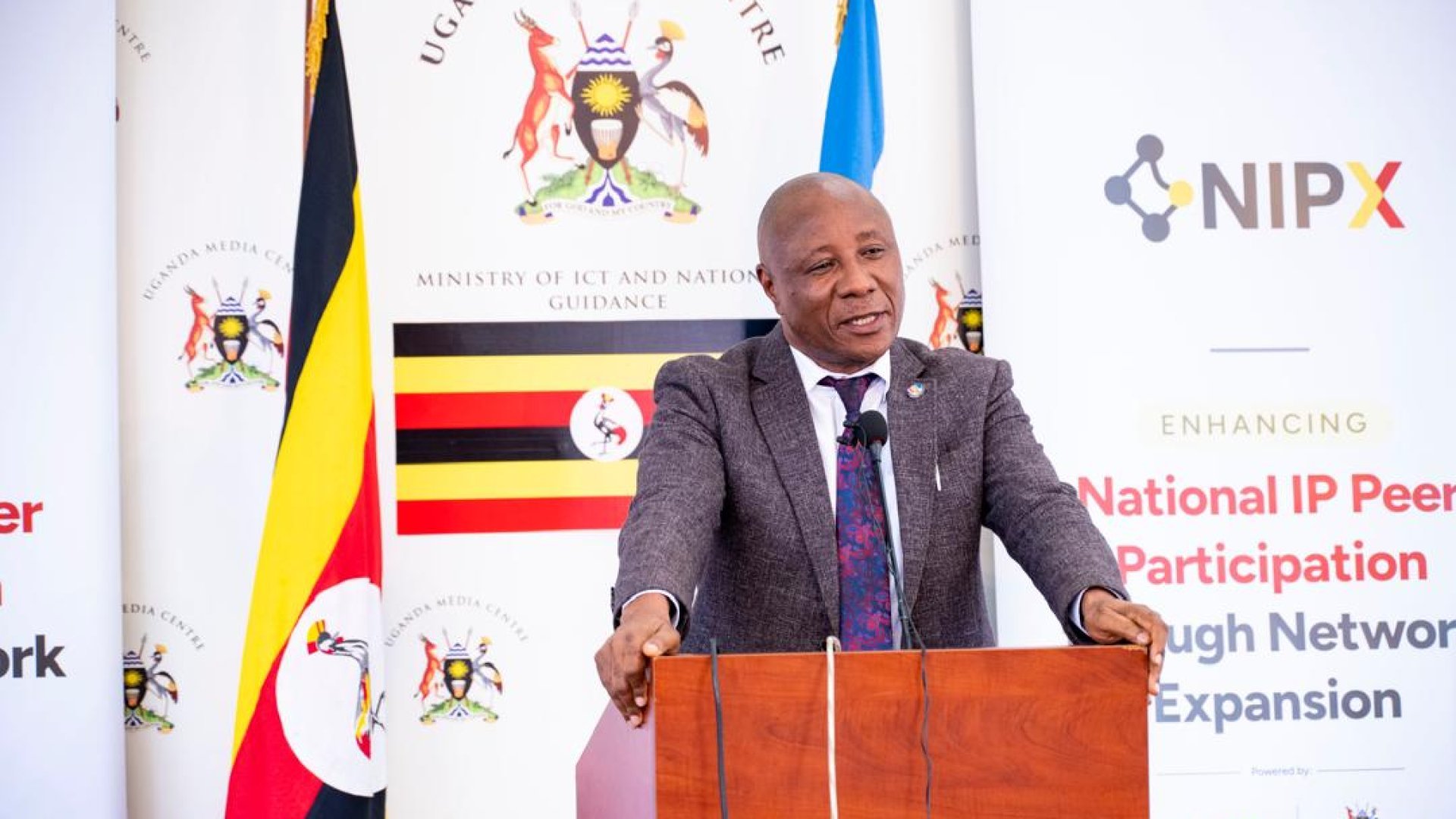
In a bid to reduce operational costs for internet service providers, reduce internet costs and spur growth in Uganda’s broader digital economy, the National Information Technology Authority-Uganda (NITA-U), in partnership with the Ministry of ICT and National Guidance, is set to roll out the National IP Peering Exchange (NIPX).
Previously, local internet traffic in Uganda had been forced to take expensive and unnecessary detours, leaving the country’s borders and then returning. This inefficiency had acted as a hidden digital tax on businesses, consumers, and the entire economy, inflating costs and slowing down digital services. With the advent of the NIPX, these mishaps will become a thing of the past.
Speaking to journalists and other stakeholders today at the Uganda Media Centre, Hon. Kabbyanga Godfrey Baluku, the State Minister for National Guidance, highlighted the game-changing impact that the NIPX will inspire. “The upcoming launch of NIPX firmly positions Uganda as a competitive and attractive ICT hub in the East African region and beyond,” he said.
He also added that, “This world-class infrastructure will attract both local and foreign investment, stimulate innovation, foster the growth of local content and digital services, and create new economic opportunities for our youth and entrepreneurs.”
Furthermore, Hon. Kabbyanga emphasised that the partnership between the Ministry and NITA-U demonstrates the Government’s commitment to providing the enabling environment and infrastructure necessary for Uganda’s digital transformation to thrive.
He concluded his speech by urging Internet Service Providers (ISPs), content providers, data centres, cloud service companies, and digital businesses to immediately connect to and peer with the NIPX.
Also present at the media briefing was Mr Richard Obita, the Director of Technical Services, who represented the Executive Director of Uganda Media Centre. He weighed in on the ownership model that would guide the adoption and use of the NIPX.
“The NIPX operates under a neutral ownership model, which means that it is neither owned nor controlled by the Government. Instead, it is collectively owned by its members, for the benefit of all,” he said. “We have deliberately adopted international best practices in governance, ensuring shared oversight where no single entity, including Government, holds a controlling interest,” he added.
With regards to the impact of the NIPX, he asserted that it would have a positive impact on the everyday lives of Ugandans as they would expect smoother video calls, faster access to websites and applications, improved e-government services, enhanced online learning experiences, and more efficient business operations.
Godfrey Sserwamukoko, the Chairperson of the Internet Service Providers Association of Uganda (ISPAU), speaking on behalf of the private sector, welcomed the development, saying: “The NIPX provides a neutral and open platform that has the potential to optimise local traffic exchange and bring meaningful cost efficiencies. We look forward to active collaboration with all stakeholders to ensure maximum participation and to realise the full benefits of faster and more affordable internet services for businesses and citizens across Uganda.”
The NIPX is a national asset which speaks to the pillar of Science, Technology, Engineering, and Innovation (STEI) as part of Uganda’s Vision 2040. This pillar aims to promote research, technology adoption, and innovation to increase industrial productivity. NIPX is set to be officially launched on Friday, 17th April 2026, during an awareness and engagement workshop at Speke Resort Munyonyo.
Previously, local internet traffic in Uganda had been forced to take expensive and unnecessary detours, leaving the country’s borders and then returning. This inefficiency had acted as a hidden digital tax on businesses, consumers, and the entire economy, inflating costs and slowing down digital services. With the advent of the NIPX, these mishaps will become a thing of the past.
Speaking to journalists and other stakeholders today at the Uganda Media Centre, Hon. Kabbyanga Godfrey Baluku, the State Minister for National Guidance, highlighted the game-changing impact that the NIPX will inspire. “The upcoming launch of NIPX firmly positions Uganda as a competitive and attractive ICT hub in the East African region and beyond,” he said.
He also added that, “This world-class infrastructure will attract both local and foreign investment, stimulate innovation, foster the growth of local content and digital services, and create new economic opportunities for our youth and entrepreneurs.”
Furthermore, Hon. Kabbyanga emphasised that the partnership between the Ministry and NITA-U demonstrates the Government’s commitment to providing the enabling environment and infrastructure necessary for Uganda’s digital transformation to thrive.
He concluded his speech by urging Internet Service Providers (ISPs), content providers, data centres, cloud service companies, and digital businesses to immediately connect to and peer with the NIPX.
Also present at the media briefing was Mr Richard Obita, the Director of Technical Services, who represented the Executive Director of Uganda Media Centre. He weighed in on the ownership model that would guide the adoption and use of the NIPX.
“The NIPX operates under a neutral ownership model, which means that it is neither owned nor controlled by the Government. Instead, it is collectively owned by its members, for the benefit of all,” he said. “We have deliberately adopted international best practices in governance, ensuring shared oversight where no single entity, including Government, holds a controlling interest,” he added.
With regards to the impact of the NIPX, he asserted that it would have a positive impact on the everyday lives of Ugandans as they would expect smoother video calls, faster access to websites and applications, improved e-government services, enhanced online learning experiences, and more efficient business operations.
Godfrey Sserwamukoko, the Chairperson of the Internet Service Providers Association of Uganda (ISPAU), speaking on behalf of the private sector, welcomed the development, saying: “The NIPX provides a neutral and open platform that has the potential to optimise local traffic exchange and bring meaningful cost efficiencies. We look forward to active collaboration with all stakeholders to ensure maximum participation and to realise the full benefits of faster and more affordable internet services for businesses and citizens across Uganda.”
The NIPX is a national asset which speaks to the pillar of Science, Technology, Engineering, and Innovation (STEI) as part of Uganda’s Vision 2040. This pillar aims to promote research, technology adoption, and innovation to increase industrial productivity. NIPX is set to be officially launched on Friday, 17th April 2026, during an awareness and engagement workshop at Speke Resort Munyonyo.
The author is a Communications Officer at the Ministry of ICT & National Guidance.