Communication
How Technology Can Build Smarter Waste Systems in Uganda
What happens to Kampala’s waste after it leaves homes, markets, offices and businesses?
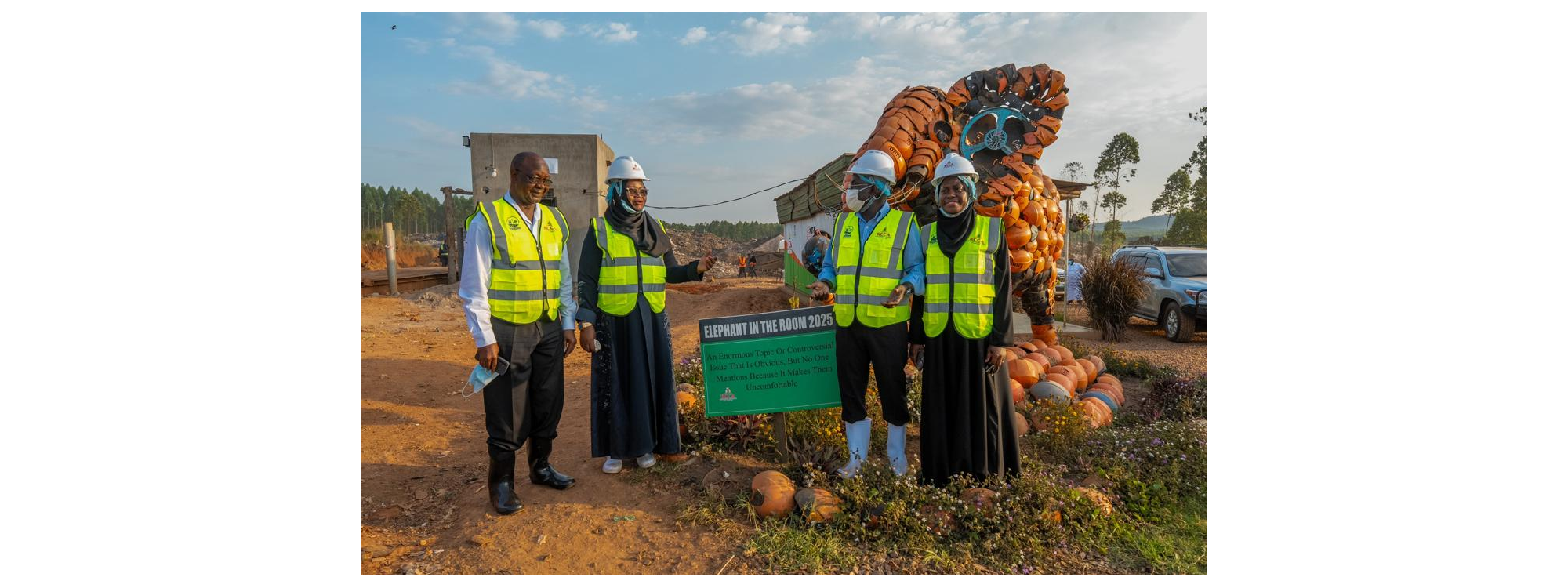
This was one of the key questions that guided a high-level government visit to the Buyala Solid Waste Management Facility in Mpigi District on 12th June 2026.
Led by Sharifah Buzeki, Executive Director of KCCA, the delegation included Dr Aminah Zawedde, Permanent Secretary at the Ministry of ICT and National Guidance; Bageya Waiswa, Permanent Secretary at the Ministry of Works and Transport; and Alex Kakooza, Permanent Secretary in the Office of the Prime Minister.
The visit formed part of a whole-of-government approach to improving waste management systems in Uganda. The facility, managed by KCCA, handles waste collection and disposal, providing a practical demonstration of the scale and complexity involved in managing urban waste in a rapidly growing city.
The tour highlighted the key operations and systems in place at the facility and demonstrated the surrounding community's active involvement in waste management. This includes participation in waste collection, material recovery, and a range of informal economic activities that contribute to resource recovery and local livelihoods.
Situated on a 230-acre site, Buyala currently operates on five acres that were approved as an emergency waste disposal area while plans for a modern integrated waste management facility are being developed. The facility receives between 1,500 and 2,000 tonnes of waste every day through an estimated 170 truck trips from Kampala and the Greater Kampala Metropolitan Area.
A key observation from the visit was the significant potential for digitisation to improve operational efficiency and strengthen data-driven decision-making across the waste management value chain. The need for reliable data systems was noted as critical in supporting planning, improving service delivery, and enhancing accountability in the management of urban waste.
Dr Zawedde, noted that digital transformation presents an opportunity to move from estimates to real-time data, supporting smarter planning and improved service delivery.
“If we are to modernise waste management, we must move from estimates to real-time data that supports planning, accountability and smarter service delivery. Digitisation will help us understand how much waste we generate, where it comes from and how best to manage it,” she said.
During the visit, officials observed the recently installed weighbridge, which is expected to improve the accuracy of waste measurement at the facility. Digital systems were highlighted as key enablers for tracking waste from collection to disposal, improving environmental monitoring, and strengthening national planning for future infrastructure needs.
The delegation also visited the leachate treatment ponds, where wastewater from decomposing waste is treated through a natural biological process before being safely discharged. The process takes approximately 63 days and reflects the integration of engineered systems and environmental safeguards in waste management operations.
The Executive Director of KCCA noted that Buyala plays a dual role in both environmental protection and economic activity.
“Buyala is more than a waste disposal facility. It supports livelihoods, protects public health, and provides an opportunity for us to develop a modern waste management system that recovers value from waste while protecting the environment,” she said.
More than 417 waste pickers operate at the site, recovering recyclable materials such as plastics, metals, paper, and rubber. Between 50 and 100 tonnes of recyclable materials are recovered daily and channeled into recycling industries. The facility also supports traders, transporters, food vendors, and other small businesses that depend on activities around the site. On average, waste pickers earn about UGX 40,000 per day, depending on the materials recovered.
Officials noted that improving waste segregation at the household level remains critical to reducing pressure on disposal systems and increasing recycling efficiency.
Looking ahead, KCCA plans to transform Buyala into a modern integrated waste management and resource recovery hub. The long-term vision includes waste sorting, composting, recycling, and waste-to-energy systems, with only a small proportion of residual waste requiring engineered landfill disposal.
Significant progress has already been made, including the installation of a weighbridge, improved operational systems, ongoing environmental and social impact assessments, and the preparation of detailed designs and a master plan for the 230-acre site.
The visit reaffirmed the importance of digital transformation, innovation and data-driven decision-making in modernising public service delivery. It also highlighted the need for stronger coordination across government to build smarter, more efficient, and sustainable waste management systems in Uganda.
This was one of the key questions that guided a high-level government visit to the Buyala Solid Waste Management Facility in Mpigi District on 12th June 2026.
Led by Sharifah Buzeki, Executive Director of KCCA, the delegation included Dr Aminah Zawedde, Permanent Secretary at the Ministry of ICT and National Guidance; Bageya Waiswa, Permanent Secretary at the Ministry of Works and Transport; and Alex Kakooza, Permanent Secretary in the Office of the Prime Minister.
The visit formed part of a whole-of-government approach to improving waste management systems in Uganda. The facility, managed by KCCA, handles waste collection and disposal, providing a practical demonstration of the scale and complexity involved in managing urban waste in a rapidly growing city.
The tour highlighted the key operations and systems in place at the facility and demonstrated the surrounding community's active involvement in waste management. This includes participation in waste collection, material recovery, and a range of informal economic activities that contribute to resource recovery and local livelihoods.
Situated on a 230-acre site, Buyala currently operates on five acres that were approved as an emergency waste disposal area while plans for a modern integrated waste management facility are being developed. The facility receives between 1,500 and 2,000 tonnes of waste every day through an estimated 170 truck trips from Kampala and the Greater Kampala Metropolitan Area.
A key observation from the visit was the significant potential for digitisation to improve operational efficiency and strengthen data-driven decision-making across the waste management value chain. The need for reliable data systems was noted as critical in supporting planning, improving service delivery, and enhancing accountability in the management of urban waste.
Dr Zawedde, noted that digital transformation presents an opportunity to move from estimates to real-time data, supporting smarter planning and improved service delivery.
“If we are to modernise waste management, we must move from estimates to real-time data that supports planning, accountability and smarter service delivery. Digitisation will help us understand how much waste we generate, where it comes from and how best to manage it,” she said.
During the visit, officials observed the recently installed weighbridge, which is expected to improve the accuracy of waste measurement at the facility. Digital systems were highlighted as key enablers for tracking waste from collection to disposal, improving environmental monitoring, and strengthening national planning for future infrastructure needs.
The delegation also visited the leachate treatment ponds, where wastewater from decomposing waste is treated through a natural biological process before being safely discharged. The process takes approximately 63 days and reflects the integration of engineered systems and environmental safeguards in waste management operations.
The Executive Director of KCCA noted that Buyala plays a dual role in both environmental protection and economic activity.
“Buyala is more than a waste disposal facility. It supports livelihoods, protects public health, and provides an opportunity for us to develop a modern waste management system that recovers value from waste while protecting the environment,” she said.
More than 417 waste pickers operate at the site, recovering recyclable materials such as plastics, metals, paper, and rubber. Between 50 and 100 tonnes of recyclable materials are recovered daily and channeled into recycling industries. The facility also supports traders, transporters, food vendors, and other small businesses that depend on activities around the site. On average, waste pickers earn about UGX 40,000 per day, depending on the materials recovered.
Officials noted that improving waste segregation at the household level remains critical to reducing pressure on disposal systems and increasing recycling efficiency.
Looking ahead, KCCA plans to transform Buyala into a modern integrated waste management and resource recovery hub. The long-term vision includes waste sorting, composting, recycling, and waste-to-energy systems, with only a small proportion of residual waste requiring engineered landfill disposal.
Significant progress has already been made, including the installation of a weighbridge, improved operational systems, ongoing environmental and social impact assessments, and the preparation of detailed designs and a master plan for the 230-acre site.
The visit reaffirmed the importance of digital transformation, innovation and data-driven decision-making in modernising public service delivery. It also highlighted the need for stronger coordination across government to build smarter, more efficient, and sustainable waste management systems in Uganda.
The author is a Communications Officer at the Ministry of ICT & National Guidance.