Digital Skilling
Girls and Young Women Gain Digital Skills at AGCCI Coding Camp
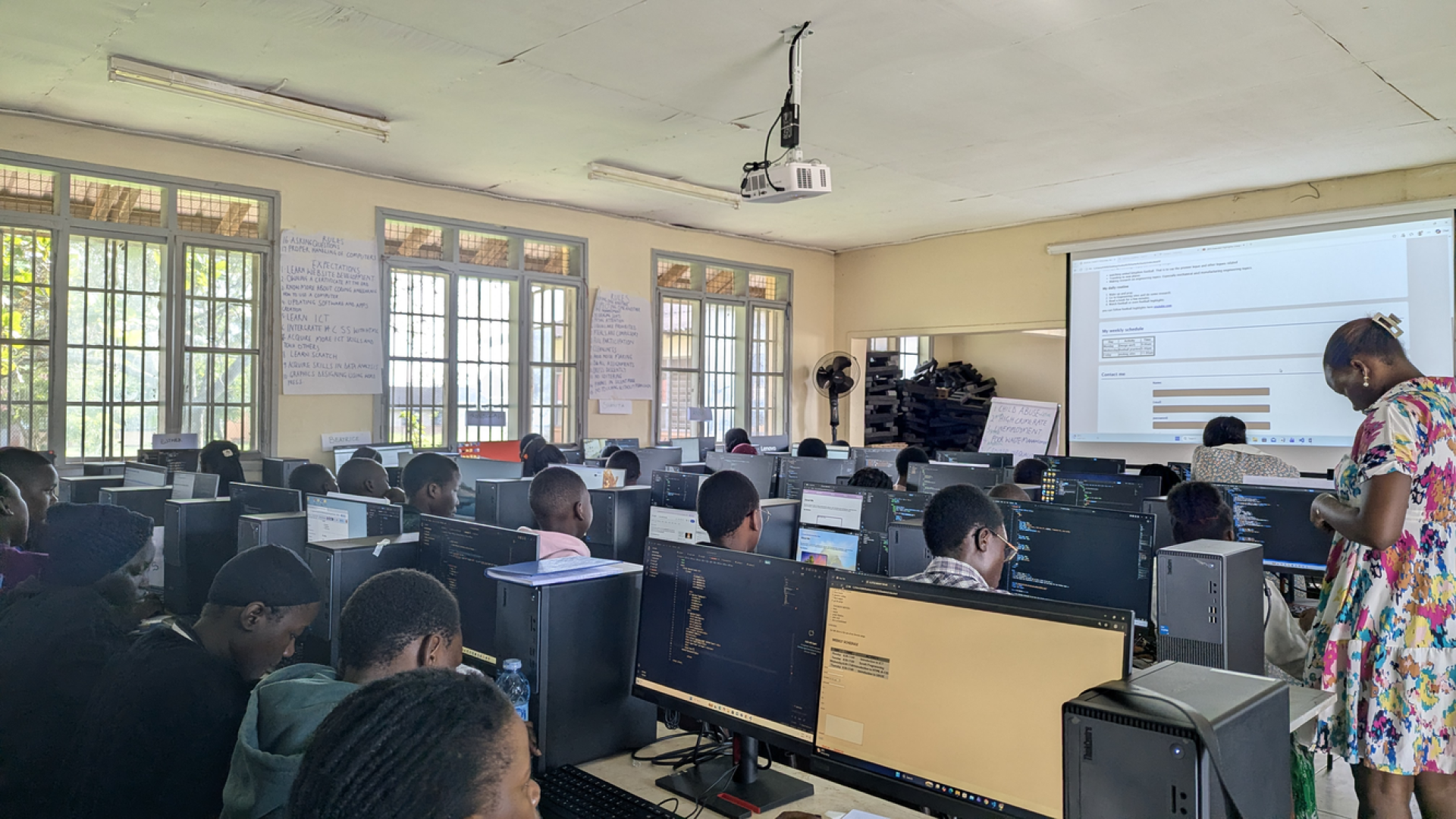
As the curtains drew on the African Girls Can Code Initiative (AGCCI)-Phase IV Coding Camp at Wanyange Girls Secondary School in Jinja on 22nd May 2026, a total of 60 young women and adolescent girls graduated with digital literacy skills in a joint effort implemented by UN Women, the African Union Commission (AUC), and the International Telecommunication Union (ITU) in partnership with the Ministry of ICT and National Guidance.
This training, the fourth of its kind, intended to address the persistent gender digital divide in Africa by equipping adolescent girls and young women with coding, digital literacy, and leadership skills. This comes against the backdrop of the AGCCI advancing the 2030 Agenda for Sustainable Development through championing the Sustainable Development Goals (SDG’s) 4,5 and 8 on inclusive and equitable quality education, gender equality and women’s empowerment, as well as decent work and economic growth respectively since 2018.
Furthermore, this initiative also perfectly aligns with the African Union’s Agenda 2063 and the National ICT and education priorities the latter of which, seeks to foster a digital economy by integrating digital skills and STEM education into the mainstream. Additionally, it explicitly calls for integrating ICT into educational curricula to ensure equitable access and building human resource capacity.
Addressing the participants of the Coding camp at the closing ceremony held at the school premises, Harriet Awilli, an Information Technology Officer at the Ministry of ICT and National Guidance, applauded them for having taken the challenge wholeheartedly and showing commitment during the entirety of the course. She also highlighted that the skills that the girls had learnt were crucial and align with the digital transformation roadmap that is geared towards achieving Vision 2040.
The closing ceremony also had a special allocation to alumni of the camp from the third cohort to testify about the impact of the skills they had gained and how their new counterparts could leverage on their skills to better their lives. One such person was a one Shaluwa who is currently a student in Senior six at the same school. She recounted he fondest memories from the previous camp.
“Last year in June, we came here for a coding camp. It was ten days and after that camp, we had attained several skills. We learnt how to create websites, games and apps. So right now, I can create my own app, create a website and build a robot,” she said. “That camp opened up many opportunities for me and I realized that what boys can do, girls can do best,” she added while receiving a rapturous round of applause from the crowd.
Shaluwa concluded her speech with a rallying call to all the girls to come together and build a world where girls not only follow change but actually lead the change. This resonated well with the implementing partners as during the evaluation of AGCCI Phase III, there was strong evidence that attested to the effectiveness of intensive residential coding camps as an entry point for girls and young women into the digital ecosystem.
The graduates from Phase IV of the coding camp benefitted from a vast array of modules which include but are not limited to: hands-on training in basic programming languages and digital tools, group-based innovation projects that address real-life community challenges and daily sessions on personal development, digital safety and rights. Others were guest talks and mentorship panels featuring female ICT professionals and end-of-camp exhibitions to showcase student projects and recognize achievements.
As this camp took place at Wanyange Girls Secondary School, a similar camp was taking place in Kabarole district where a select group of also 60 adolescent girls and young women aged 17-25 years of age were being equipped with the same digital literacy skills. At the end of both coding camps, each of the participants walked away with a certificate of participation.
This training, the fourth of its kind, intended to address the persistent gender digital divide in Africa by equipping adolescent girls and young women with coding, digital literacy, and leadership skills. This comes against the backdrop of the AGCCI advancing the 2030 Agenda for Sustainable Development through championing the Sustainable Development Goals (SDG’s) 4,5 and 8 on inclusive and equitable quality education, gender equality and women’s empowerment, as well as decent work and economic growth respectively since 2018.
Furthermore, this initiative also perfectly aligns with the African Union’s Agenda 2063 and the National ICT and education priorities the latter of which, seeks to foster a digital economy by integrating digital skills and STEM education into the mainstream. Additionally, it explicitly calls for integrating ICT into educational curricula to ensure equitable access and building human resource capacity.
Addressing the participants of the Coding camp at the closing ceremony held at the school premises, Harriet Awilli, an Information Technology Officer at the Ministry of ICT and National Guidance, applauded them for having taken the challenge wholeheartedly and showing commitment during the entirety of the course. She also highlighted that the skills that the girls had learnt were crucial and align with the digital transformation roadmap that is geared towards achieving Vision 2040.
The closing ceremony also had a special allocation to alumni of the camp from the third cohort to testify about the impact of the skills they had gained and how their new counterparts could leverage on their skills to better their lives. One such person was a one Shaluwa who is currently a student in Senior six at the same school. She recounted he fondest memories from the previous camp.
“Last year in June, we came here for a coding camp. It was ten days and after that camp, we had attained several skills. We learnt how to create websites, games and apps. So right now, I can create my own app, create a website and build a robot,” she said. “That camp opened up many opportunities for me and I realized that what boys can do, girls can do best,” she added while receiving a rapturous round of applause from the crowd.
Shaluwa concluded her speech with a rallying call to all the girls to come together and build a world where girls not only follow change but actually lead the change. This resonated well with the implementing partners as during the evaluation of AGCCI Phase III, there was strong evidence that attested to the effectiveness of intensive residential coding camps as an entry point for girls and young women into the digital ecosystem.
The graduates from Phase IV of the coding camp benefitted from a vast array of modules which include but are not limited to: hands-on training in basic programming languages and digital tools, group-based innovation projects that address real-life community challenges and daily sessions on personal development, digital safety and rights. Others were guest talks and mentorship panels featuring female ICT professionals and end-of-camp exhibitions to showcase student projects and recognize achievements.
As this camp took place at Wanyange Girls Secondary School, a similar camp was taking place in Kabarole district where a select group of also 60 adolescent girls and young women aged 17-25 years of age were being equipped with the same digital literacy skills. At the end of both coding camps, each of the participants walked away with a certificate of participation.
The author is a Communications Officer at the Ministry of ICT & National Guidance.