Partnerships
Strengthening Uganda's Cyber Security with Expert Training

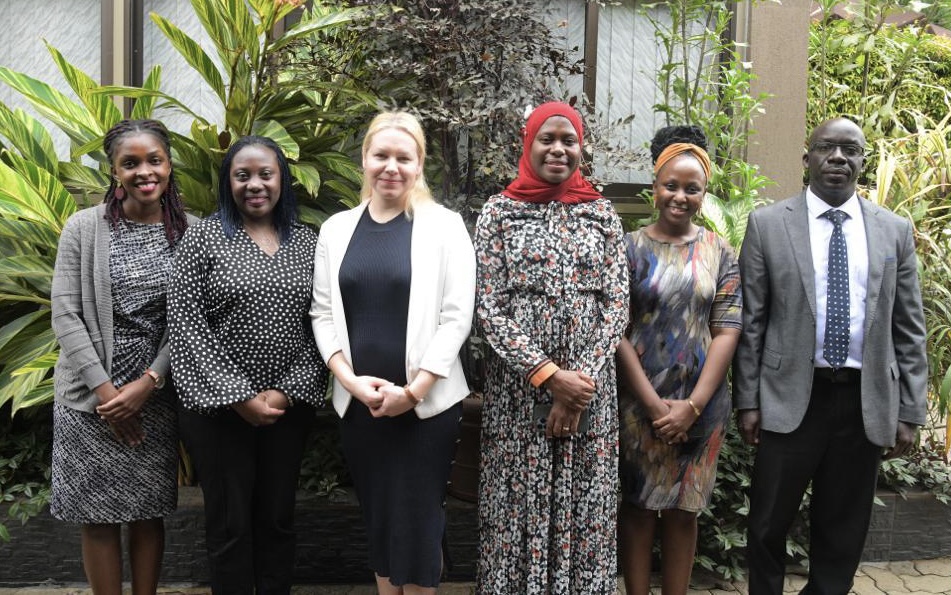
As technology continues to reshape how people live and work around the world, Uganda is strategically positioning itself in the digital age. In this context, the Eastern Africa Standby Force (EASF), together with the Ministry of Defence and Veteran Affairs (MODVA), held an intensive, week-long training on cyber security and cyber terrorism from November 17th to 21st at Onomo Hotel in Kampala. The workshop underscored that cybersecurity is not a luxury, but a national priority, a core security concern, and a key pillar for economic growth. As Uganda advances its economic digitization, cyber threats are escalating, prompting the government to deploy robust initiatives guided by strategic partnerships and national security frameworks. Key attendees of this training included the Uganda Police, Uganda Media Centre, Makerere University, Ministry of Defence and Veteran Affairs, and Ministry of ICT and National Guidance, among others
During the training, experts emphasized that national security is no longer confined to land, air, and sea. It now includes the invisible but highly vulnerable digital space. National security today means protecting citizens, critical infrastructure, political sovereignty, economic stability, and information systems from internal and external threats.
Participants learned that terrorist groups have increasingly infiltrated ICT systems, exploiting cyberspace to recruit followers, spread extremist ideologies, coordinate operations, and even finance their activities. Uganda, like many nations, must therefore develop stronger technological defences and adapt to modern warfare's digital realities.
Some of the topics discussed include: emerging technologies in counter terrorism, types of intelligence, reconstructing the online radicalization, data protection and privacy, critical infrastructure protection, cyber governance and policy, and national and regional cybersecurity frameworks. In this holistic approach, cyber threats are no longer distant possibilities; they have already begun affecting citizens, institutions, and systems today.
There was a sobering lesson from the workshop regarding the nature of cyber terrorism. A cyber terrorist does not need physical access, unlike a traditional terrorist. An internet connection, a device, and a moment of vulnerability are all they need to spread panic, fear, and confusion. Mr. Bernard Wanyama, one of the trainers, said that Cyber Terrorism can sneak through our devices without being noticed; therefore, technology alone cannot defend a nation, but enlightened, vigilant, and empowered citizens can.
In this workshop, participants were reminded that they now hold responsibility for Uganda's digital safety. In addition to awareness and vigilance, the strongest weapons a nation can possess are knowledge and vigilance. Participants were encouraged to raise alarms when they detected suspicious online behaviour, discourage harmful digital practices, counter misinformation and extremist content, and promote unity.
It was emphasized that awareness without action is powerless. It is therefore imperative that cybersecurity becomes a habit and a culture eventually. Uganda's youth, technologists, and social media influencers were referred to as "the power of social media to shape public opinion and national consciousness in today's digital age".
“With one post you can inform; with one video you can unite or divide; with one message you can inspire or mislead,” said Nyimbi Odero, one of the facilitators.
During the training, experts emphasized that national security is no longer confined to land, air, and sea. It now includes the invisible but highly vulnerable digital space. National security today means protecting citizens, critical infrastructure, political sovereignty, economic stability, and information systems from internal and external threats.
Participants learned that terrorist groups have increasingly infiltrated ICT systems, exploiting cyberspace to recruit followers, spread extremist ideologies, coordinate operations, and even finance their activities. Uganda, like many nations, must therefore develop stronger technological defences and adapt to modern warfare's digital realities.
Some of the topics discussed include: emerging technologies in counter terrorism, types of intelligence, reconstructing the online radicalization, data protection and privacy, critical infrastructure protection, cyber governance and policy, and national and regional cybersecurity frameworks. In this holistic approach, cyber threats are no longer distant possibilities; they have already begun affecting citizens, institutions, and systems today.
There was a sobering lesson from the workshop regarding the nature of cyber terrorism. A cyber terrorist does not need physical access, unlike a traditional terrorist. An internet connection, a device, and a moment of vulnerability are all they need to spread panic, fear, and confusion. Mr. Bernard Wanyama, one of the trainers, said that Cyber Terrorism can sneak through our devices without being noticed; therefore, technology alone cannot defend a nation, but enlightened, vigilant, and empowered citizens can.
In this workshop, participants were reminded that they now hold responsibility for Uganda's digital safety. In addition to awareness and vigilance, the strongest weapons a nation can possess are knowledge and vigilance. Participants were encouraged to raise alarms when they detected suspicious online behaviour, discourage harmful digital practices, counter misinformation and extremist content, and promote unity.
It was emphasized that awareness without action is powerless. It is therefore imperative that cybersecurity becomes a habit and a culture eventually. Uganda's youth, technologists, and social media influencers were referred to as "the power of social media to shape public opinion and national consciousness in today's digital age".
“With one post you can inform; with one video you can unite or divide; with one message you can inspire or mislead,” said Nyimbi Odero, one of the facilitators.
The author is a Senior Communication Officer at the Ministry of ICT & National Guidance.